
📺 Watch the full video here:
This was my first time pulling up the Magnificent Seven charts in 2026, and I intentionally hadn’t reviewed them since before Christmas. That made this a useful real-time exercise in how to come back to charts you haven’t touched in a while and re-establish support and resistance without bias or guesswork.
In this video, I walk through each of the Mag 7 names using existing chart annotations, updating levels live and explaining how and why certain levels get removed, promoted, or recycled. The focus here isn’t prediction — it’s structure, process, and having a clear plan regardless of direction.
🔍 Highlights
1️⃣ Alphabet (GOOGL)
Google has already resolved higher from its prior consolidation. The December 16 resistance was broken cleanly, so that level no longer belongs on the chart.
With price trading above the November 25 high, the most important adjustment was promoting short-term support to the January 6 low. After a breakout, recent structure carries more weight than older reference points.
I also identified the 50% midpoint of the December 17 range, which is a level I routinely track across markets. Midpoints often act as decision zones, whether price is advancing or pulling back.
Google is at new highs. If upside continues, round numbers come into play — but structurally, the January 6 low is the most important level to hold.
2️⃣ Amazon (AMZN)
Amazon is a good example of recycling levels instead of constantly drawing new ones. A previously broken trendline that acted as support was simply moved to the next logical resistance area.
Using the “start from the right and work backward” approach, resistance aligns near the November 10–12 area, with the next upside reference near the November 4 high.
On the downside, the January 2 low is the most important short-term support following consolidation. When multiple supports exist, I prioritize them by historical significance — the actual traded low matters most, followed by the midpoint, with old highs being less important.
Structurally, Amazon still looks more likely to work higher toward the mid-250s than roll over, but the roadmap is now clearly defined either way.
3️⃣ Meta (META)
Meta remains unresolved. Price is pressing into support, but momentum — via RSI Power Zones — is sitting near neutral.
A daily close below the December 15 low would begin to shift the short-term bias bearish. Until that happens, this remains range behavior.
On the upside, a move back above the January 6 high would put Meta back into expansion mode. For now, this is a wait-for-confirmation chart.
4️⃣ Microsoft (MSFT)
Microsoft hasn’t changed much — and that’s meaningful.
All prior levels remain intact, and price continues to move sideways. This is a time correction, not a price correction.
However, price continues to stay beneath the old September 5 bottom, and the longer that persists, the more this begins to resemble redistribution rather than consolidation. Short-term, the risk leans toward weakness unless behavior improves.
5️⃣ Nvidia (NVDA)
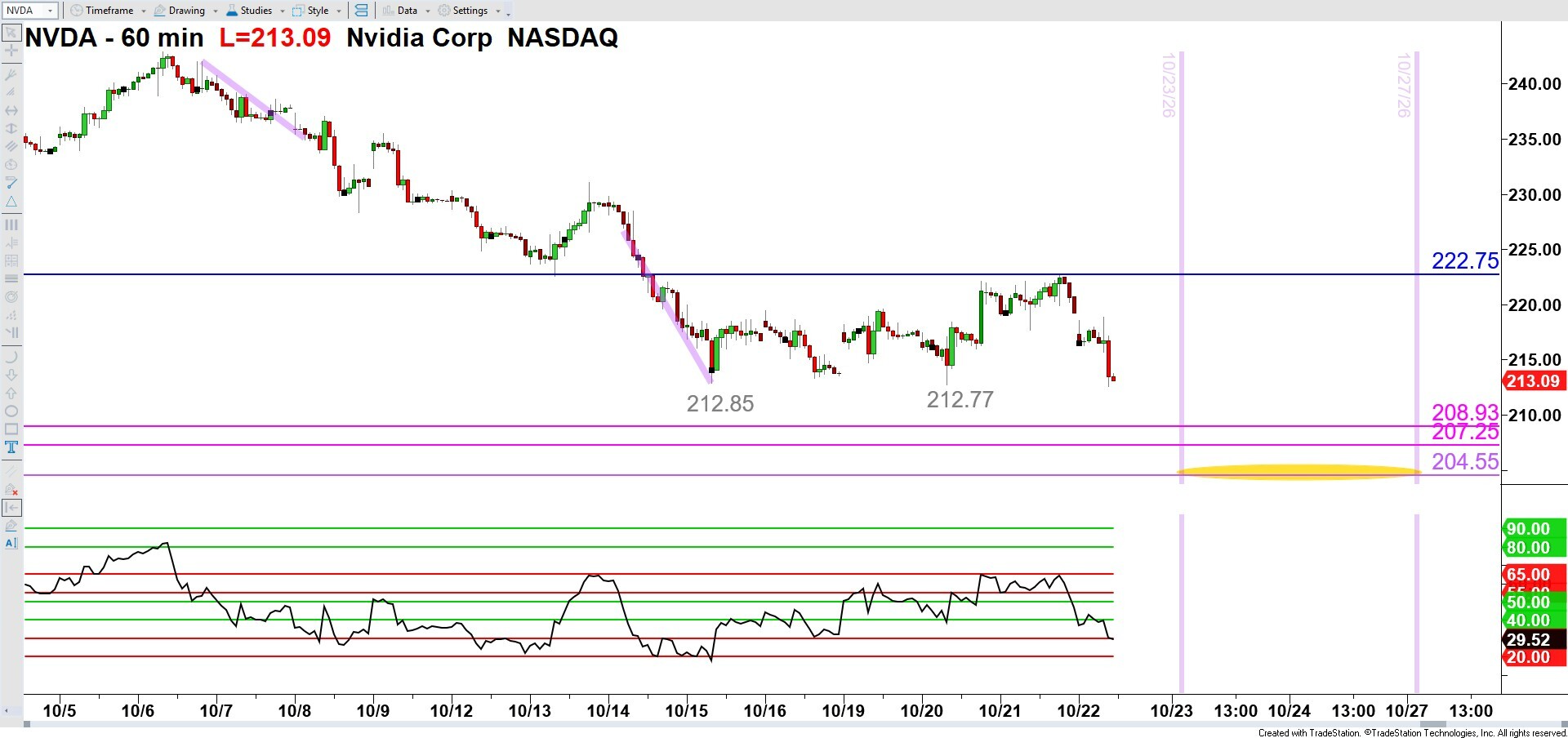
Nvidia is showing short-term weakness. Price broke above the December 8 high but failed to follow through, and RSI Power Zones have rotated back into bear resistance.
What stands out most is the repeated failure to close above the 50% retracement of the October 29 to November 25 decline. That midpoint was tested multiple times and rejected each time.
If weakness continues, the next area to watch is the December 17 high, with short-term support near the opposite 50% retracement in the high-180s to low-190s range.
6️⃣ Tesla (TSLA)
Tesla has undergone a healthy pullback, with price exceeding the 50% retracement of the prior advance. Despite that, RSI Power Zones remain in support, which keeps the broader structure constructive.
A move above the January 5 high would favor a return toward the December 22 range. That remains the higher-probability scenario.
If price fails to move higher, layered supports are in place below — including the old high, the midpoint, and the actual traded low, which remains the most important level to respect.
This walkthrough is a reminder that you can step away from charts and return without forcing conclusions — as long as you follow a process.
Removing outdated levels, promoting relevant structure, respecting midpoints, and ranking support and resistance by significance allows you to stay flexible and prepared. That approach applies whether you’re trading stocks, futures, or learning new markets entirely.
Use these levels as reference points — not rigid expectations — and let price behavior do the talking.
~ Hima
Leave a Reply