
📺 Watch the full video here:
When you’re looking at the broad markets, it helps to widen your lens — not just watching one index but comparing across a few. Today I’m walking through the major micro stock index futures, how they differ from their e-mini counterparts, and why understanding those nuances can help you choose the right vehicle for your trading style and account size.
Because even though these contracts often move similarly, the way you participate — and the capital you commit — matters just as much as the chart you’re analyzing.
🔍 Highlights
1️⃣ Micro E-mini S&P 500 Futures (MES)
MES gives you a way to trade S&P 500 movement with a smaller account, while still following the same daily trends, candlestick structure, and momentum as the ES. Prices aren’t always identical, but the market behavior is extremely similar — which makes it a flexible option if you’re transitioning into futures or short-term trading.
2️⃣ Micro E-mini Nasdaq-100 Futures (MNQ)
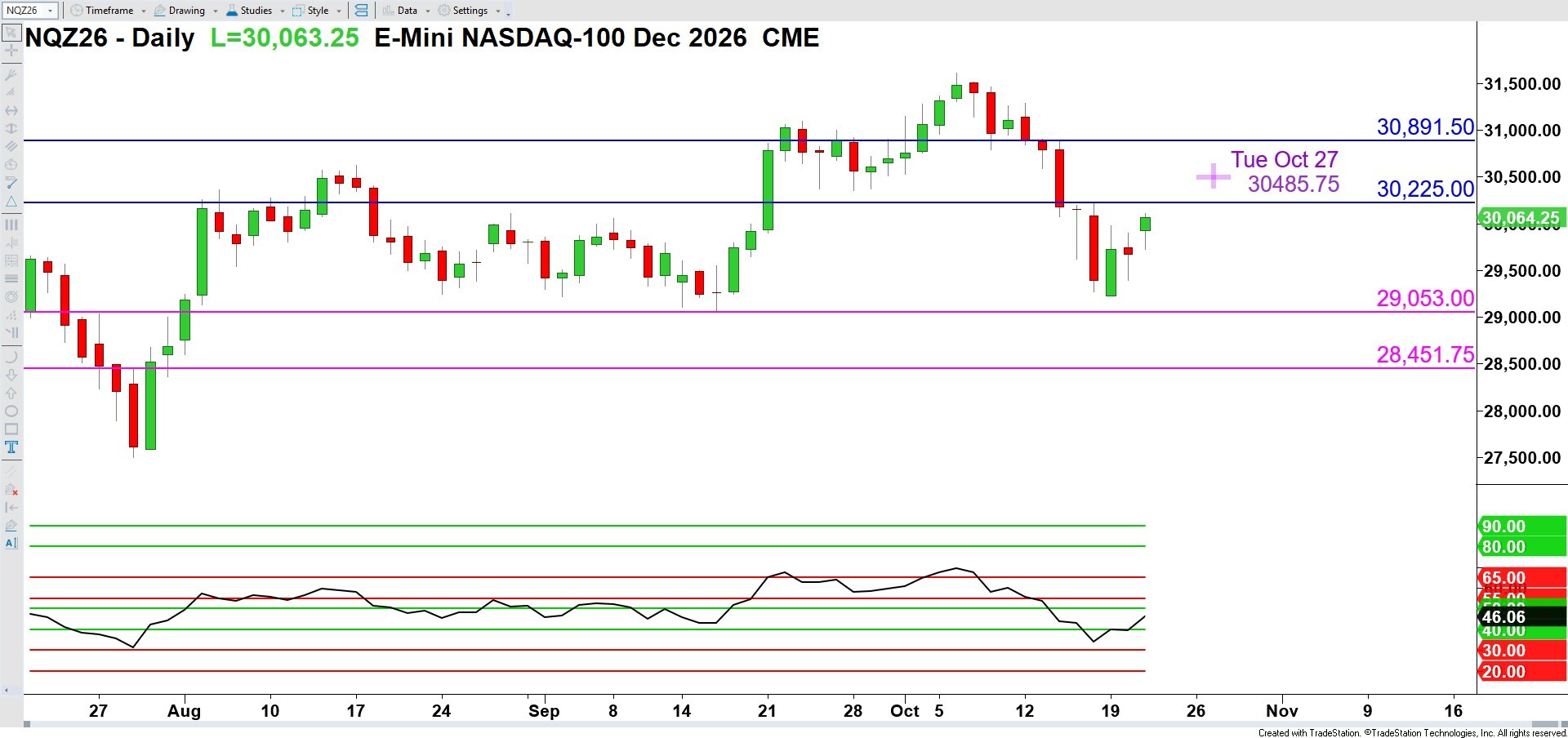
MNQ mirrors the movement of NQ closely, including the recent retracement toward the 50% level of the decline from October 30 to November 21. Both charts show similar candlesticks and momentum, and the key area to monitor is still the November 20 high — which would support a stronger bullish continuation if reclaimed.
3️⃣ Micro E-mini Dow Jones Futures (MYM)
MYM continues to show more strength relative to the other broad indexes. It held above the October 10 low and already pushed through its November 20 high. If this strength carries on after the holiday week, it could continue working its way back toward the November 12 low, around 48,000.00.
Whether you’re trading e-mini futures, ETFs, or micro e-mini futures, the key is knowing that these charts move similarly — but the capital requirements and per-point value do not. You can look at the Chicago Mercantile Exchange (CME Group) for contract differences and specifications.
~Hima
PS: Subscribe to my YouTube channel to get notifications as soon as new videos are ready
Leave a Reply